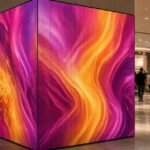
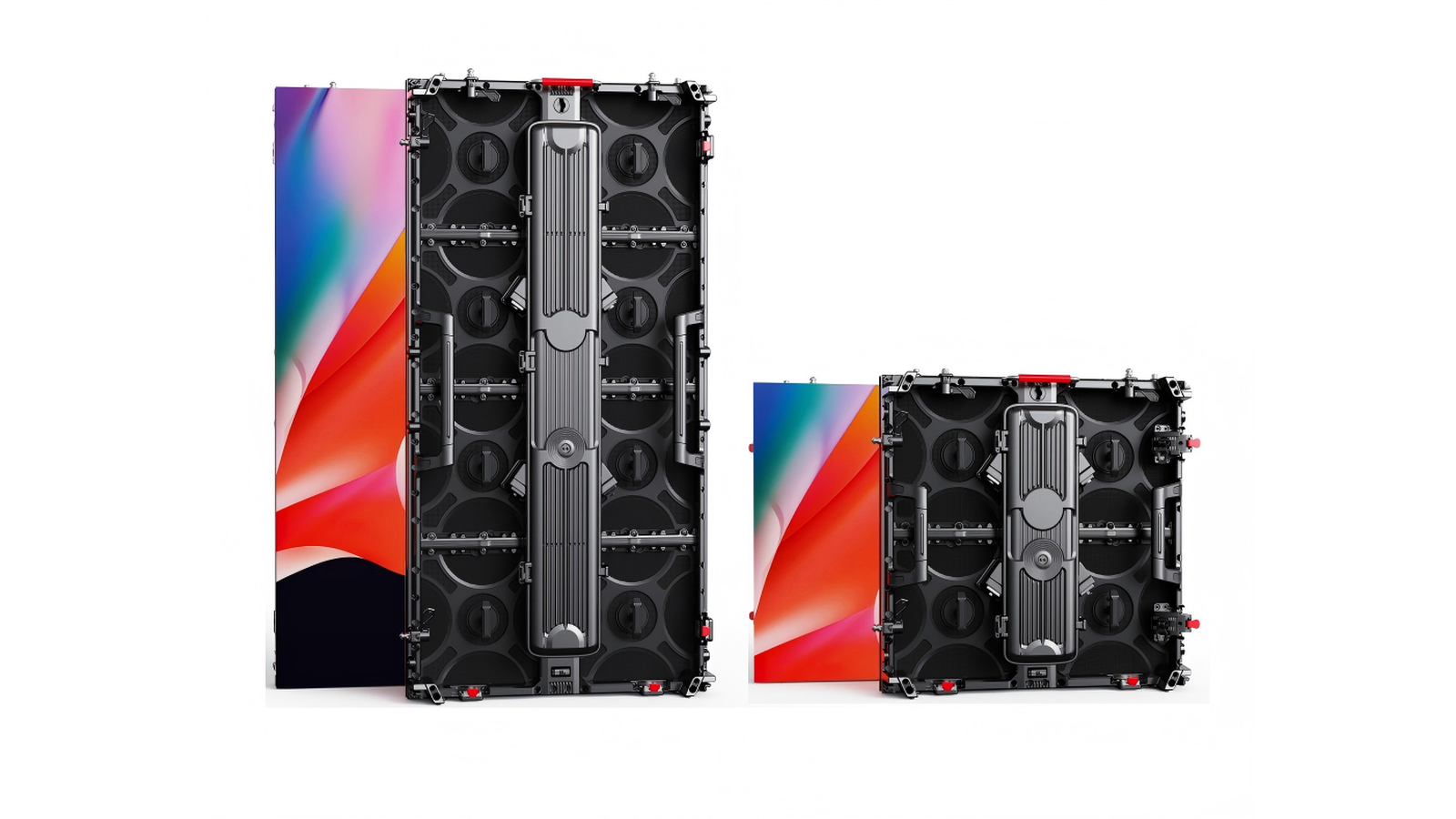

A 2 November 2026 trade-press feature, updated 4 November, made a point that is easy to over-read. Large interactive walls used to force a compromise: LCD video walls still showed bezels a finger had to cross, a sheet of glass in front of the picture created parallax, projection put the user in their own image, and LED was often too coarse — and too fragile — to stand an arm’s length away and touch. Fine-pitch LED, sealed COB and GOB surfaces, and infrared sensor frames have changed that picture, the piece argued. The useful buyer question is narrower than “LED can do touch now”: when a quote says “interactive LED wall,” have you specified the pitch for a person standing at the wall, a written manufacturer approval to touch that exact surface, a sensor you can test, a structure flat enough to feel right, and the content that will run on it — or have you only bought a finer module?
We are deliberately not naming the publication’s interviewees, the sensor specialists quoted in the piece, or any “hero” LED or touch-frame series. This is a dated explainer, not a sell-through ranking and not a product review.
Honest social note: our X ProAV trade search in this window returned no usable rental / fine-pitch / interactive-LED trade stories (AI-video, consumer-tech, and entertainment noise dominated). A public forum thread about museum interactive walls exists, but the page we fetched dated it about a year old — not a fresh Monday spike — and the original poster specifically asked about a touch path without an infrared frame. We are writing from dated trade heat + RFQ literacy, not from an invented viral moment. This is also a Monday pass: we did not find a fresh 7, 8, or 9 November LED industry wire that displaced this unused feature.
One more boundary before the facts box. If the brief is really “which packaging is COB, GOB, SMD, or MIP,” those comparisons already live on our GOB LED display guide, COB vs SMD, and MIP vs COB posts. Today is not a rewrite of those articles. Today is the touch-wall RFQ: when a sealed fine-pitch surface plus a sensor frame is the comparable quote, and which checks still decide whether people can use the wall every day. If the brief is really “all-in-one meeting-room package versus a custom cabinet wall,” that is a different system-class question (a separate unpublished note — we are not linking a page that is not live).
What the dated public signal actually published
Treat these as dated trade examples under stated conditions, not an SFxDisplay price list and not a substitute for your project datasheet, integrator method statement, or acceptance test:
| Item | Public example (2 / 4 Nov 2026 trade-press feature) | Buyer read |
|---|---|---|
| Four requirements | A sensor that is fast and precise; pitch matched to arm’s-length viewing; a surface that feels smooth, should not run too hot, and survives repeated touch; public-space impact / vandalism protection when visitors can reach the wall | Write those four lines into the RFQ before you compare prices |
| Why older paths compromised | LCD video-wall bezels; glass over the picture creating parallax; front projection (user in the image, screen flex); open SMD often not released for touch, so glass and a heat gap were added; coarser LED broke up at arm’s length | “Interactive video wall” is not one technology. Name the path. |
| What changed on the LED side | Fine pitch under about 1.5 mm described as widely catalogued across price segments; GOB (epoxy over finished SMD modules) and COB (unpackaged chips, then encapsulated) can both feel smooth; many manufacturers now release some of those surfaces for touch | “Fine pitch” and “sealed” are not the same as “approved to touch.” Ask for the letter. |
| Heat at the surface | COB described as theoretically a bit cooler; in practice it depends on the implementation. Efficiency gains and smaller, bottom-contacted chips were cited as reasons less heat now reaches the front | “Should feel fine” is not a rating. Test continuous operation. |
| Sensor path | An infrared frame spans emitters and receivers just above the surface; a finger breaks beams. No extra glass layer over the image. Curved sections can use horizontal-only sensor bars. Newer frames can mount directly to the cabinet, leaving about a 1 cm visible edge | Ask how the frame mounts, what you can test, and what the edge will look like |
| How large, in the feature | Infrared sensors for projects described as reaching up to 600 inches; transitions between curved and straight sections described as feasible | Treat size talk as a published example, not an SFx limit and not a promise that every room should go that large |
| What still decides daily use | Structure (a few tenths of a millimetre in the bottom row accumulate; cabinets should align to each other, not to an uneven wall; front-adjustable depth; form-stable profiles rather than a DIY rack); content and interaction planned from the start | The module is no longer the bottleneck. Saving money only on the wall, then improvising the frame, the mount, or the playback, is how a “touch wall” disappoints |
| Who the piece said still needs a simpler path | Not only one-off TV studios — also budget-driven “simple 16:9 conference screens” | A conference 16:9 canvas still needs the same written checks if people will touch it |
| Adjacent same-week (not today’s hero) | All-in-one distributor-unit numbers; a Hangzhou sphere-scale landmark story; outdoor MIP product wires; corporate wrap and processor-validation recirculation | Different lanes — soft-note only; see pending / live posts below |
Chinese buyer literacy soft-supports the same fork, even though public pages were thin to fetch today: teams say 「LED 触摸墙」 and then discover they are comparing an infrared frame over a sealed fine-pitch wall with a glass-covered LCD wall, or with a package that never received a written touch release. That is a different meaning from 软连接 / 硬连接, which is about how rental cabinets connect internally — that lane already lives on our soft vs hard connection post.
Why two “interactive LED” quotes can mean different things

On a showroom, museum, conference, or studio RFQ, “touch” describes almost nothing about whether you are buying a sealed fine-pitch wall plus a tested infrared frame, a glass overlay that changes parallax and service, or a display that was never released for contact.
- Pitch has to be specified for a person standing at the wall.
The first viewer on a touch wall is often an arm’s length away, reading labels, timelines, or UI chrome — not a seat at the back of the room. A pitch that looks fine from eight metres can break into visible pixels when a hand is on the surface. Write the standing distance and the content type down so two quotes use the same assumption. Soft-link live resolution / pixel map. (We are not reopening an unpublished pitch-selection note; this is only the measurement principle.) - A sealed surface is not automatically approved for touch.
On open SMD, a finger feels the gaps between packages, and many manufacturers would not release that surface for contact. GOB adds a protective layer over finished modules. COB places unpackaged chips on the board and then encapsulates them. Both can feel smooth. That still is not permission. Ask for written manufacturer approval of the exact COB or GOB surface on the quote. Packaging literacy belongs on the live GOB guide, COB vs SMD, and MIP vs COB posts — it does not replace the approval letter. - The common LED path uses a sensor frame, not a sheet of glass over the picture.
An infrared frame sits just above the wall. A finger, a gloved hand, or another opaque pointer can break the beams. That avoids the extra glass layer that created parallax on many older LCD walls. It is also why some museum briefs that say “no IR frame” are asking for a different path — often a glass or capacitive overlay — and should not be compared, line by line, with an IR-over-LED quote. Ask which sensor method is in the SKU, how it mounts (a separate surround, or attached to the cabinets), and what the visible edge will be. The dated feature described newer cabinet-mounted frames leaving about a one-centimetre edge; treat that as a published example, not a standard you should assume. - Flatness is part of the touch experience.
If one cabinet stands proud, a finger feels the step and an eye sees it. A few tenths of a millimetre in the bottom row become a visible and tactile error at the top of a tall wall. The dated feature warned against treating the substructure as the line you can cheap out — form-stable profiles, cabinets that align to each other rather than to an uneven wall, and front-adjustable cabinet depth are the kind of method statements that belong in the RFQ. Soft-link live setup time / load-in for the work that actually burns hours, and live front vs rear service for how a failed module comes off a wall people are allowed to touch. - The wall is not the whole system.
Playback, the interactive application, calibration, and who is allowed to change content decide whether the sensor is doing anything useful on opening day. The dated feature’s closing point was that LED itself has become cheaper and simpler; interaction, structure, and playback still have to catch up. A display-only purchase order is not a touch-wall RFQ.
Eight RFQ checks before you compare “interactive LED” quotes

- Pitch versus arm’s length, in writing.
Standing distance at the wall, the smallest type or UI element people must read, and the pitch each bidder used. Soft-link live resolution / pixel map. - Written touch approval for the exact surface.
COB, GOB, or another sealed finish — named by series — plus a manufacturer statement that this surface may be touched. “Sealed” on a slide is not that letter. - Surface heat in continuous operation.
How the wall feels after it has been on, not only after thirty seconds. The feature said COB can run a little cooler in theory and that practice depends on the design. Ask for a test, not a slogan. - A sensor you can test.
Infrared or another method; how the frame mounts; the visible edge; response and precision against the gestures you actually planned; how many simultaneous touch points are specified, if multi-touch matters. Public catalogs advertise very different point counts — treat those as vendor talk, not a default. - Public-space protection, if visitors can reach the wall.
Impact, cleaning, and vandalism. A showroom that is staffed all day is not the same RFQ as an unattended museum alcove. - Structure and flatness.
Form-stable profiles, how cabinets reference each other, front-adjustable depth, and who is responsible if a step can be felt or seen. Do not leave this as “installer to advise.” - Content, playback, and interaction from day one.
Which application runs on the wall, who builds it, which inputs and processors are in scope, and how the wall is calibrated to that content. Soft-link live calibration / gamma / white balance and, if cameras or a refresh path are in scope, live 3840Hz vs 7680Hz refresh. - Lane check, so you do not buy the wrong post.
If the real question is COB versus SMD versus GOB versus MIP as packaging, use the live packaging guides linked above. If the real question is a preconfigured meeting-room all-in-one versus a custom cabinet wall, that is a system-class brief, not today’s touch checks. If the comparison is LED versus a projector in an event hall, use live LED wall vs projector. If the brief is a hard 90° corner cabinet, use live 90° corner. Today stays on fine-pitch LED touch.
How to run the RFQ without drowning in an “LED can do touch now” slide
- Freeze the room class first. Showroom, museum gallery, conference 16:9 canvas, or a studio set — each has a different standing distance, duty cycle, and public-access profile.
- Require a one-page comparison sheet: standing distance and pitch, written touch approval, surface-heat test, sensor method and mount, visible edge, public-space protection, structure/flatness method, service access, content/playback owner, and power/structure notes. Soft-link live peak vs average power, circuits vs outlets, and energy efficiency RFQ.
- Price the non-screen lines. The frame, the mount, the application, installation, and spare policy still move the number. Soft-link live LED video wall cost 2026 and module locking / service hardware.
- Keep packaging literacy adjacent, not substituted. A smoother surface helps touch. It does not, by itself, prove the sensor, the structure, or the content were designed.
Honest boundaries
- This is not a product review of any fine-pitch series, COB/GOB family, or named infrared-frame vendor. Names are left out on purpose.
- The dated feature’s examples — including “under about 1.5 mm,” “about a 1 cm visible edge,” and “up to 600 inches” — are public illustrations, not SFxDisplay specifications, published day rates, or a claim that SFx sells an infrared touch-frame SKU in this article.
- Confirm datasheet ratings, the manufacturer’s written touch approval, integrator method statements, and acceptance tests. Literacy ranges are for RFQ conversation — they are not a substitute for engineering.
- This post is fine-pitch LED touch-wall RFQ hygiene. It is not a rewrite of live GOB LED display guide, COB vs SMD, or MIP vs COB (those articles own packaging comparison). It is not a rewrite of the pending Nov-8 all-in-one versus cabinet meeting-room piece (system class). It is not a rewrite of pending Nov-7 processor validation, Nov-6 corporate wrap, Nov-5 moving-rigging, Nov-3 curved fleet, Nov-2 booth, or Oct-23 outdoor MIP (Nov-6 outdoor wires, recirculated again on 8 November, corroborate that pending lane — prefer refresh later). It is not a rewrite of live outdoor P3 watch-party, transparent no-PSU, 90° corner, energy efficiency RFQ, or LED wall vs projector.
- A cheapest “interactive LED” line is not automatically the same system as the next quote — an unapproved surface, a pitch chosen for the back wall, an untested frame, a DIY mount, and a missing content owner are how rooms discover the mismatch after the wall is already hung.
- We are not claiming a Monday sales spike in touch walls; we are using the dated feature as the reason buyers are asking the interactive-LED question with finer pitch now.
Related reading (already live)
- GOB LED Display Guide
- COB vs SMD LED Display
- MIP vs COB LED
- LED Wall Resolution / Pixel Map
- LED Wall Calibration / Gamma / White Balance
- 3840Hz vs 7680Hz LED Refresh Rate
- LED Video Wall Cost 2026
- LED Wall Setup Time & Load-In
- LED Wall Peak vs Average Power
- LED Wall Venue Power: Circuits vs Outlets
- LED Energy Efficiency RFQ 2026
- Front vs Rear Service LED Display
- Magnetic vs Screw vs Front-Locking LED Modules
- LED Wall vs Projector for Events
- 90-Degree Corner LED Wall 2026
FAQ
Does “fine-pitch LED” automatically mean the wall can be touched?
No. Fine pitch helps at arm’s length. A sealed COB or GOB surface can feel smooth. You still need written manufacturer approval of that exact surface, plus a sensor path you can test.
Is an infrared frame the same as a glass touch overlay?
No. An infrared frame sits just above the LED surface and does not add a sheet of glass over the picture. A glass overlay is a different optical and service path. Some museum briefs that say “no IR frame” are asking for that other path — do not compare the two quotes as if they were the same SKU.
Are “under 1.5 mm,” “a 1 cm edge,” or “600 inches” SFxDisplay specifications?
No. Those figures appear as dated public examples in the 2 / 4 November 2026 trade-press feature. Confirm the datasheet and the integrator method statement for your wall.
Does this replace the live GOB / COB / MIP packaging guides?
No. Those posts own packaging comparison. Today asks a different question: once you have a sealed fine-pitch surface, what else must be on the touch-wall RFQ.
Does this replace the Nov-8 all-in-one versus cabinet note?
No. That unpublished piece is about system class for a meeting room (a preconfigured package versus a custom cabinet wall). Today is the interactive / touch RFQ, whether the canvas is a simple 16:9 conference screen or a larger showroom wall.
Will X / social prove this topic is “viral” today?
No honest ProAV interactive-LED spike showed up in our search window. We are writing from dated trade heat + RFQ literacy, not from invented engagement.
Planning a showroom, museum, conference, or studio wall that people will stand next to and touch — and the quotes only say “interactive LED” or “fine-pitch touch” without a standing-distance pitch, a written surface approval, a sensor test, a flatness method, or a content owner? Share the room type, how close the first user stands, whether the public can reach the wall unsupervised, and whether you need multi-touch or only single-point interaction — we will help you turn those brochure lines into a same-assumption RFQ checklist before you lock the wall.
WhatsApp +86 150 1911 0341 · molly@sfxdisplay.com · Get a quote
SFxDisplay — LED factory for rental & fixed cabinets. Industry commentary from dated public fine-pitch / interactive-LED trade heat and touch-wall RFQ literacy; not an SFx touch-frame SKU list. Two “interactive LED” quotes can mean different pitch assumptions, surface approvals, and sensor paths — lock those before you compare.