Searches for LED video wall cost 2026 usually return a single dollar-per-square-meter number. That number is almost always the LED cabinets — the modules, frames, power supplies, and receiving cards — not the wall you can turn on. In 2026, finished equipment still often lands in a $600–$2,500 per m² band depending on pitch and package. Panels themselves are commonly about 55–65% of a turnkey figure once steel, processing, freight, and spares are in.
The ranges in this article are planning estimates, not quotes. They are rounded industry bands for factory-built cabinets sold to integrators and end users. Your site, pitch, brightness, certification path, and shipping lane will move the number. Use them to see whether a bid is in the right family, then ask for a line-item quote.
The panel line (usually just over half)
What people call “the LED wall” on a quote is the visible surface: modules, cabinets, internal power, and receiving cards. Pitch is the main price lever. Fine pitch uses more LEDs, more driver ICs, tighter calibration, and more cabinets per square meter.
A useful way to read 2026 panel pricing:
- Coarser outdoor and large-venue pitches sit toward the low end of the $600–$2,500/m² equipment band.
- Common indoor event and sanctuary pitches (roughly P2.5–P2.9) sit in the middle.
- Fine indoor pitches (roughly P1.5–P1.9, and tighter) sit toward the high end, and can exceed it for specialty packages.
Cabinet mechanics move the number inside that band. Die-cast rental boxes with fast locks, hanging bars, and flight cases cost more per square meter than a simple fixed cabinet of the same pitch. Outdoor sealing, higher nits, and extra-high refresh drivers add cost for reasons that have nothing to do with how sharp the image looks from 20 m.
If two quotes for the same rectangle differ by 30%, check pitch, nits, IP, cabinet type, and lamp batch — not just the bottom line.
Steel, hanging hardware, and on-site labor
A wall needs something to hang from or stand on. That line is easy to forget on a factory quotation because it is often local.
Typical items:
- Wall-mount steel or a ground-support frame for a fixed install.
- Truss, motors, and a structural stamp for a hung rental or church IMAG wall.
- Anchors, seismic or wind calculations where the building official asks for them.
- Install labor: module mounting, cabling, alignment, and a first calibration.
Steel and labor scale with size, access, and whether the crew can work from the rear. A rear-service wall in a tight alcove can cost more to install than a larger front-service wall in an open lobby. We can design the cabinet and service direction; the steel fabricator and the installer still need a drawing and a site visit.
Do not compare a “panels only” factory number to a local turnkey bid. They are different products.
Processor, sending cards, and copper vs fiber
The wall does not display a signal by itself. Budget a video processor, sending cards, and the cables that reach the first cabinets.
- A single small indoor wall may run from one processor and a short copper run.
- A wide stage, a church with IMAG plus lyrics, or a rental inventory that reconfigures weekly needs more outputs, backups, and often fiber from FOH.
- Operators who already own NovaStar (or another house standard) can sometimes reuse a processor; new buyers should not assume that.
Processing is a smaller line than panels on most jobs, but it is not optional, and a “bargain” wall with no sending-card plan is not a complete wall. We typically ship NovaStar and can match other brands when the RFQ names them.
Freight, cases, and the dock
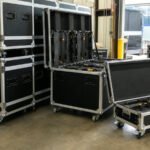
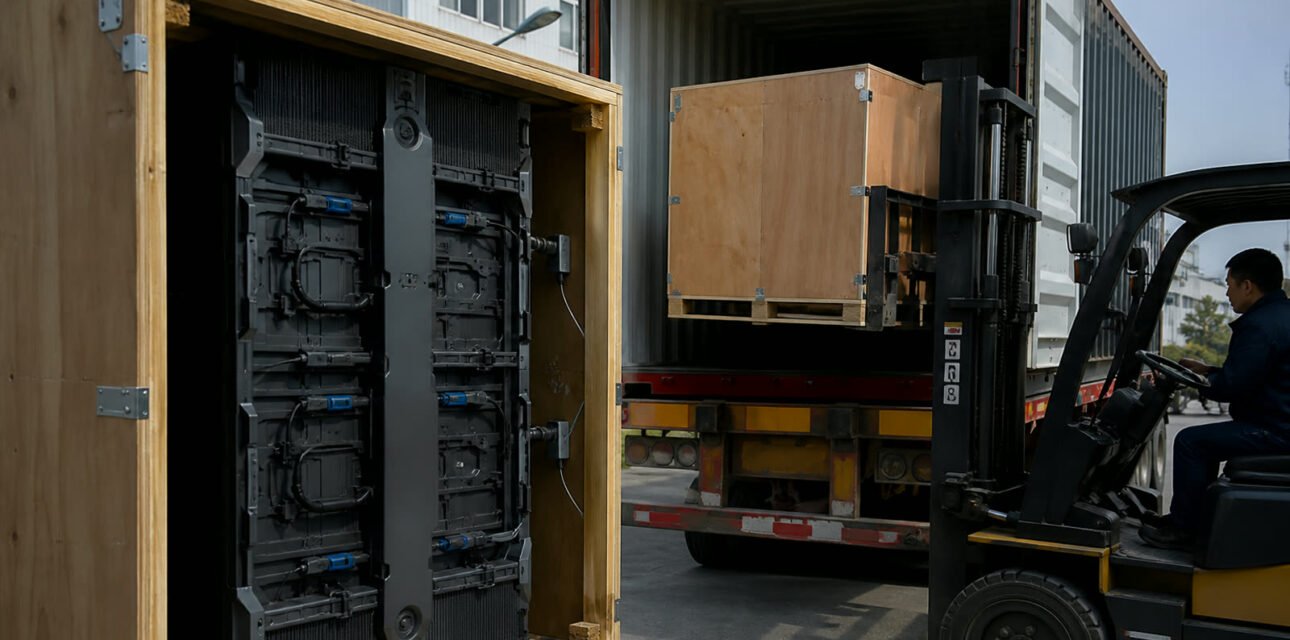
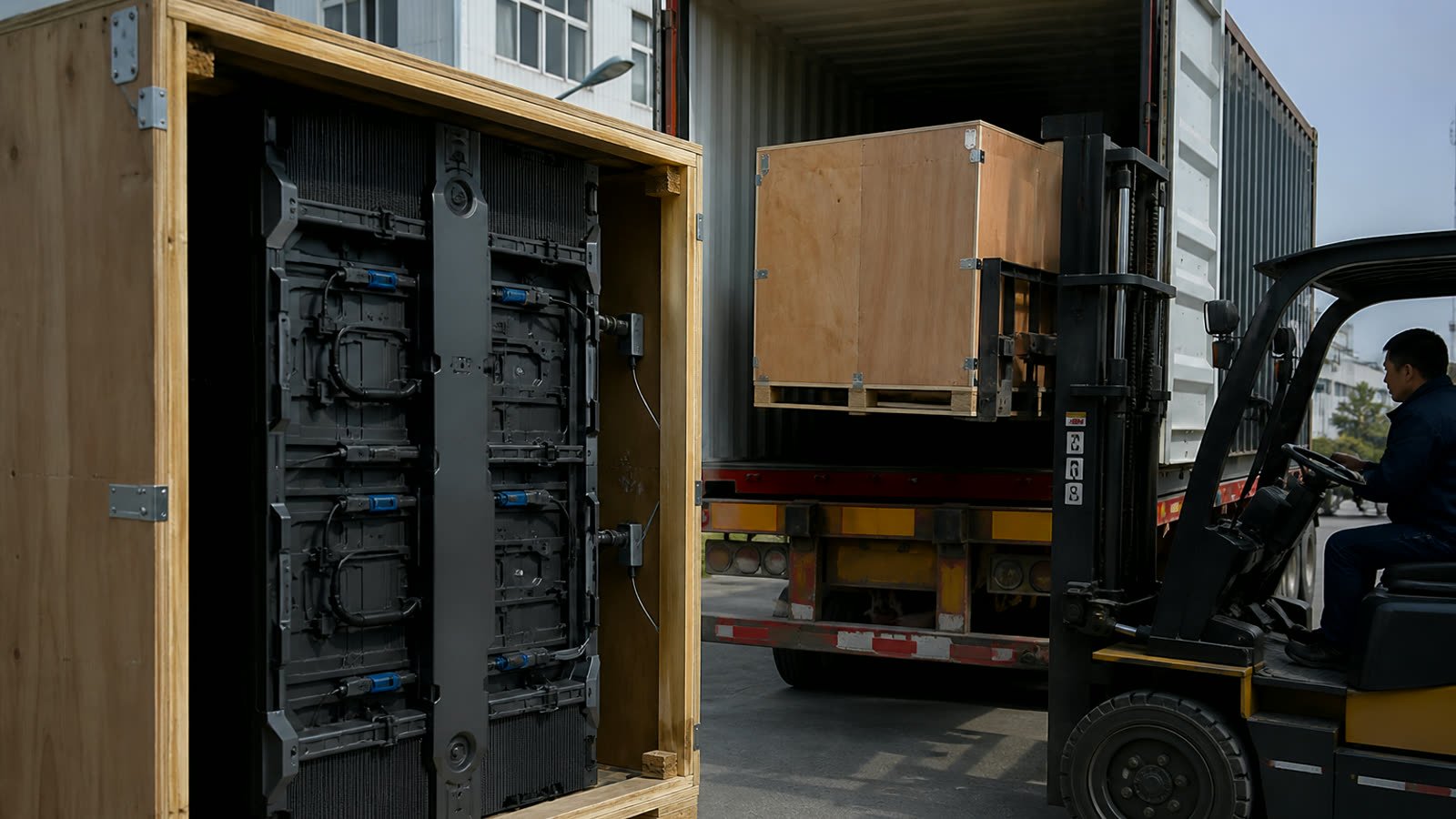
Cabinets are dense and awkward. Ocean freight, trucking, insurance, and last-mile lift gates are real money, especially for rental inventories that also need flight cases.
Rules of thumb we give buyers so they are not surprised:
- Fixed indoor cabinets can ship in cartons or on pallets. That is the cheaper path.
- Rental inventories should travel in cases. Cases add volume and weight; they also save panels.
- Transparent and irregular shapes often ship less efficiently than a stack of 500 × 500 mm boxes.
Ask for packed dimensions and weight with the quote. A low panel price that arrives as a surprise at the port is not a low panel price.
Spares you should buy on day one
LED walls are modular. When a module fails, you swap it. That only looks clean if the spare is from the same LED bin and the same production batch as the wall.
Budget about 5–10% extra modules, plus a few power supplies and receiving cards, in the original order. Buying “a couple of extras later” is how walls get a visible patch two years in. This is not a scare tactic; LED bins shift, and a 2028 module will not always match a 2026 wall under camera.
Spares belong in the 2026 cost model, not in next year’s maintenance budget.
Planning ranges: indoor, outdoor, rental, transparent
The table below is a rounded 2026 planning picture, not a price list. Figures are USD per square meter of LED surface for factory equipment (cabinets). They sit inside the $600–$2,500/m² band we see most often, with transparent and very fine pitch able to sit at the top of that band. Turnkey here means a simple multiplier assuming panels are about 60% of the job — useful for a board conversation, useless as a contract number.
| Job type (typical pitch) | Equipment, USD/m² (estimate) | If panels ≈ 60% of turnkey, very rough installed family |
|---|---|---|
| Indoor meeting / lobby (P1.5–P2.0) | $1,400–$2,500 | $2,300–$4,200 /m² |
| Indoor stage, church, ballroom (P2.5–P2.9) | $800–$1,600 | $1,300–$2,700 /m² |
| Outdoor fixed face (P3.9–P6) | $600–$1,200 | $1,000–$2,000 /m² |
| Rental die-cast, indoor or outdoor (P2.6–P3.91) | $900–$1,800 | plus cases, truss, and crew — do not use the 60% shortcut |
| Transparent window / façade (pitch varies) | $1,000–$2,200 | plus glass-side structure and daylight-bright drivers |
How to use the table:
- A 20 m² indoor P2.6 stage wall at $1,200/m² equipment is about $24,000 in cabinets before steel and processor. If panels are 60% of turnkey, the conversation is nearer $40,000 installed — still an estimate.
- Rental inventories should be priced as cabinets + cases + processor + a spare kit, then compared to how many paying dates you expect (see a separate rent-vs-buy discussion).
- Trailer jobs are not a $/m² wall. The chassis, electrics, and road compliance can rival the screen. Ask for a packaged trailer LED quote.
None of these cells is an SFxDisplay price. Lamp brand, refresh, GOB/COB, and order quantity will move you inside — or occasionally outside — the band.
How to read a 2026 quote without mixing line items
Ask the supplier to split at least five lines:
- LED cabinets (pitch, nits, IP, cabinet size, module brand family).
- Processing (processor model, sending cards, fiber or copper).
- Spares (module count, same bin).
- Packing and freight to a named port or door.
- What is not included: steel, lift, local electrical, permits.
Then compare apples to apples. A rental cabinet quote and a fixed mounting quote for the same pitch should not match, and a “cheap” quote that omits sending cards is not cheaper.
If you only need a sanity check on square meters, multiply area × a band from the table, then add 35–45% for the non-panel share on a straightforward fixed install. If the site is hung, outdoor, or camera-critical, that shortcut is too tight.
FAQ
Why do I see LED walls advertised below $600/m²? Sometimes that is a coarse outdoor pitch, a leftover batch, or modules without cabinets and cards. Sometimes it is a number that will not survive a real RFQ. Treat anything under the band as a question, not a bargain.
Does a higher price per m² mean a better wall? Not by itself. You may be paying for die-cast rental mechanics you will never tour, or for nits you will dim to 30%. Pay for the spec the site needs.
Are these 2026 numbers in USD? Yes, factory-side planning bands in US dollars. Duties, local labor, and currency will change what you actually pay.
Can you quote from a photo? We can estimate a module layout from a photo and a size. A firm number needs pitch, nits, IP, cabinet type, destination, and spare policy. Send those to contact.
Are lab or safety marks included in these bands? No. Do not assume a certification is in the price unless it is written on the quote.
Ask for a line-item estimate
If you have a rectangle, a pitch band, and a destination port, we can return a cabinet + processor + spare + packed-weight estimate you can put next to local steel. That is the useful 2026 cost conversation. Request it here.