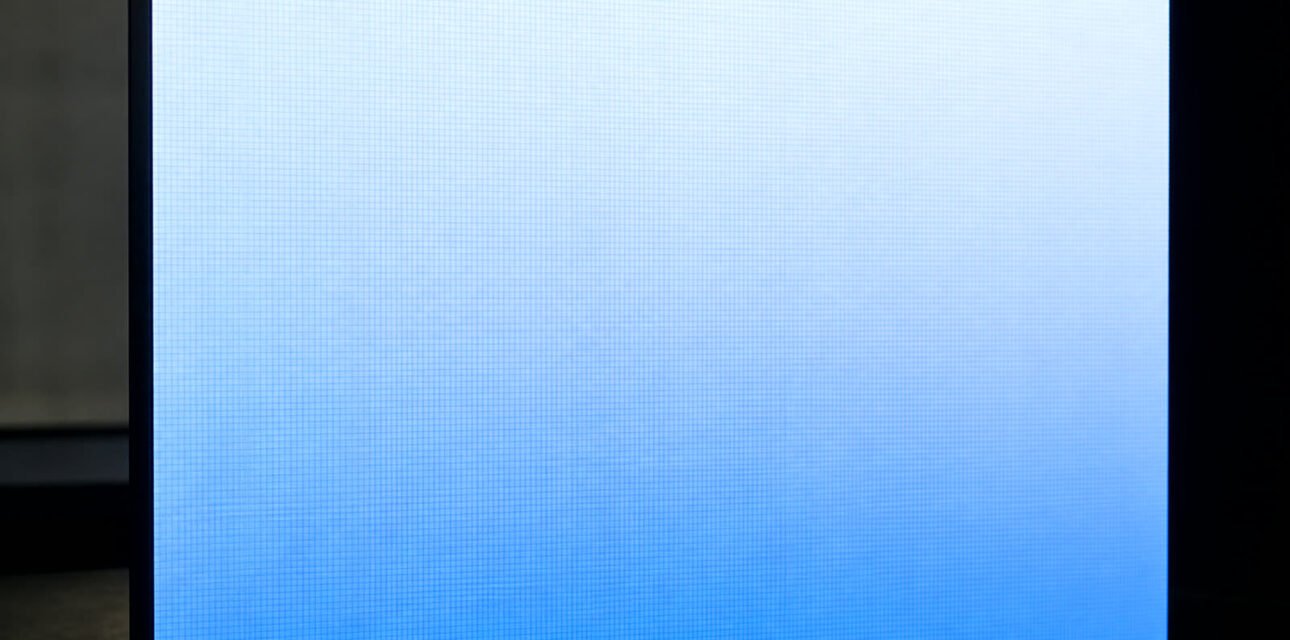
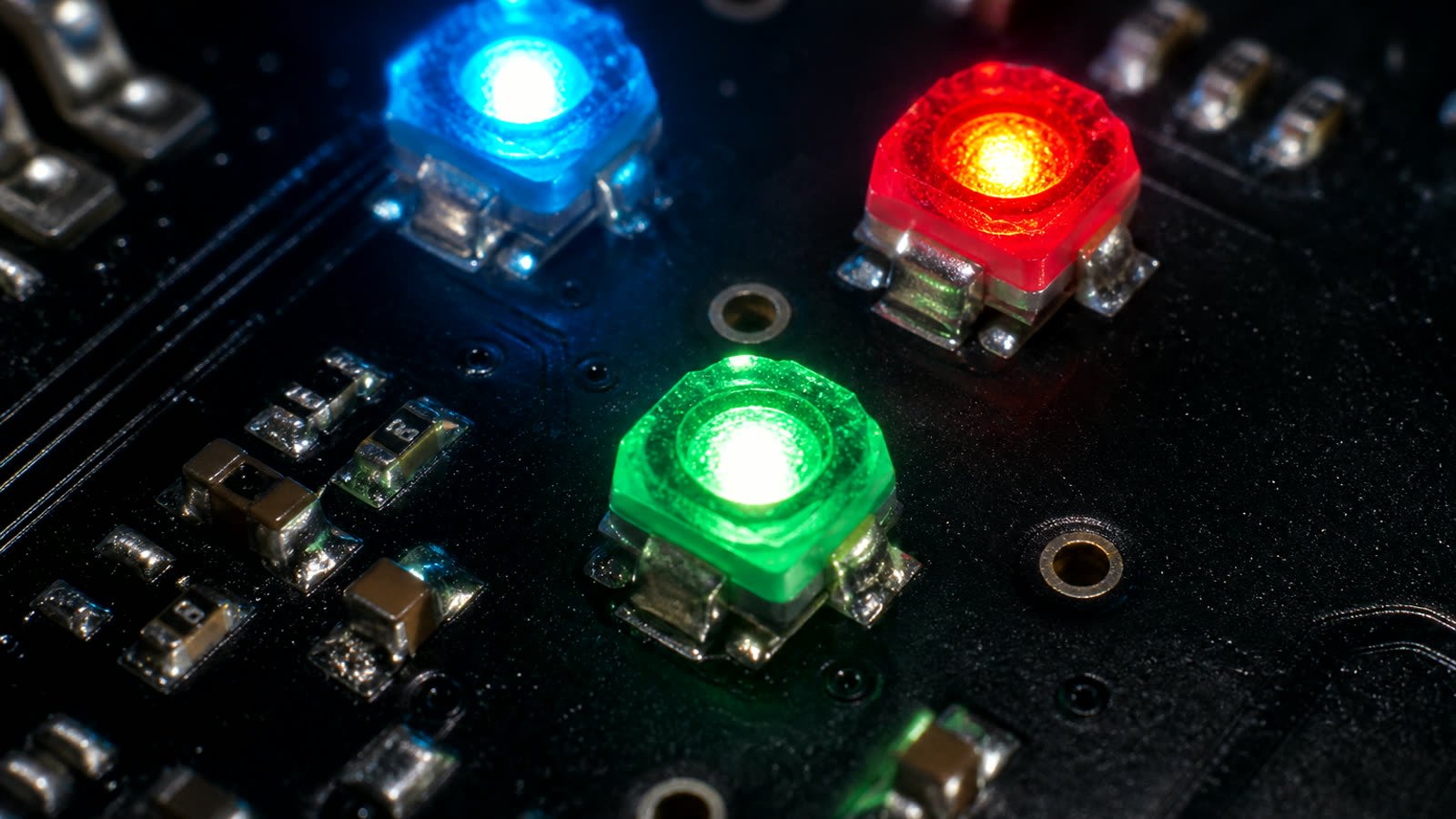
COB and SMD are two ways to put pixels on an LED module. SMD solders a packaged lamp onto the board. You can see each bead. A trained technician can replace a dead pixel. COB bonds the chips to the board and covers them with a resin layer. The face looks like a smooth tile. You do not rework a single lamp in the field. You swap the module.
That trade-off is the buying decision. SFxDisplay COB indoor screens exist for close viewing, contrast, and a surface that can take a touch. SMD rental and fixed cabinets still win when crews need fast pixel-level repair, outdoor weather, or a coarser pitch that COB would only make more expensive.
If someone tells you COB is just better now, ask two questions: how close will people stand, and who repairs a dead pixel at 2 a.m.?
What SMD and COB actually are
SMD (surface-mount device). Each pixel is a small plastic package with red, green, and blue chips inside, soldered to the PCB. The lamps sit above the board. You see a grid. SMD is the default for most rental inventory, outdoor walls, DJ booths, trailers, and taxi tops.
COB (chip on board). The LED chips sit directly on the PCB. A layer of encapsulant covers a whole area of pixels. There is no individual lamp package to knock off. The surface can be matte and nearly gapless, which helps contrast and reduces the screen-door look at short distance. SFxDisplay offers COB as an indoor product. Treat it as indoor unless a quote clearly states an outdoor COB design.
COB is not a pitch. You can build SMD at P1.5 and COB at P1.5. Pitch still comes from viewing distance. Encapsulation is about how the pixel is built and how it fails.
GOB (glue on board) is a protective coat on SMD, not COB. Ask for it on rental SMD that takes hits. Do not confuse that quote with COB.
Close viewing and image quality
At 8 m, most people cannot tell COB from good SMD of the same pitch. At 1.5 to 3 m, they can. The SMD grid, the mask, and any slightly proud lamps become part of the picture. COB's filled surface hides that structure.
COB is worth a look when viewers are inside the comfortable distance for that pitch, when the wall is a lobby, control room, boardroom, or studio, or when people can touch the face. It is usually wasted when the closest seat already clears P2.6 or P2.9 SMD, or when the job is a concert, trailer, or roadside board.
Contrast often looks stronger on COB because less mask shows through. That is an indoor benefit, not a reason to hang COB in a parking lot. See nits vs lumens and indoor vs outdoor. Moiré is still pitch, camera distance, lens, and content. Demo with the actual cameras.
Durability: what survives a bump
SMD lamps can be knocked off. Road cases, crowd barriers, DJ booths, and volunteer installs are hard on exposed beads. One hit becomes a black hole or a stuck-on pixel.
COB's resin layer spreads impact and keeps chips from popping off. For indoor walls that the public can reach, that is the main hardware argument. Schools, retail, and some studio floors like a face you can wipe.
COB is not indestructible. A deep gouge in the encapsulant can take out a patch of pixels. Heat still has to leave the module. A room with no HVAC will drift in color on COB or SMD. We will not quote a magic cooler-by-percentage figure without a thermal report on the exact cabinet. If heat is a concern, ask for power at the brightness you will use, and size cooling from that number.
Outdoor weather is still an SMD (or purpose-built outdoor) problem. IP65 gaskets, masks, and coatings matter more than indoor COB resin. Do not take an indoor COB wall outside. The same rule as indoor SMD applies.
Repairability: pixel rework vs module swap
This is where honest cost of ownership shows up.
SMD in the field. A dead lamp can often be replaced at a rework station. Rental shops keep a soldering tech or send modules to a specialist. You lose one pixel, not a whole tile. You still need spare modules, because some failures are ICs, power, or ribbon cables, not a single bead. But many dead-pixel calls on SMD are a lamp swap for someone who knows the work.
COB in the field. You do not tweeze out a chip from cured encapsulant on a load-in. You pull the module, put a spare in, and send the failed tile back to a factory-level process if it can be saved at all. Plan spare COB modules from the same production batch. A 5 to 10 percent spare kit is not optional on a large wall. Color match is the same story as any LED product: mixed bins show as patches.
If your crew already reworks SMD lamps, COB slows them down. If they only swap modules, both processes feel the same in the field. Used COB has the same color-match risk as used SMD, with less room to blend a repaired pixel.
SFxDisplay will sell indoor COB when viewing distance and touch risk justify it, and SMD rental when you need outdoor IP, common pitches, and shop-level lamp repair.
When COB is worth it
Choose COB indoor when most of these are true:
- Closest viewers are inside about 5 m (16 ft), often closer.
- The wall is a permanent or semi-permanent indoor install, not a wet festival.
- People can touch the face, or the client hates a visible lamp grid.
- You will stock same-bin spare modules and accept module-level service.
- The budget can absorb a higher price per square meter than SMD at the same pitch.
Control rooms, retail, and some lobbies hit that list. A church IMAG wall whose front row is 8 m back usually wants indoor SMD at P2.6 or P1.9, with same-bin spares. Fixed mounting can be either process. COB does not change how you hang a cabinet. It changes what you do when a pixel dies.
When SMD is the better buy
Stay with SMD for outdoor and mobile work (trailer, taxi, festival), for rental shops that rework lamps, for P2.9 or P3.91 with distant viewers, and for a DJ booth or tri-fold that must be fixed tonight (ask about GOB). Transparent LED is its own construction, not assumed COB. Ask from the homepage or product index.
COB vs SMD comparison
| Topic | SMD | COB (indoor) |
|---|---|---|
| Pixel construction | Packaged lamp soldered to PCB | Chips on PCB under encapsulant |
| Look at 1.5-3 m | Grid / lamp texture can show | Smoother face, stronger contrast |
| Look at 8 m+ | Same pitch looks similar | Extra cost buys little |
| Touch / bump | Lamps can be knocked off | Resin face takes contact better |
| Field repair | Lamp rework possible; modules still swapped | Module swap; no practical pixel rework |
| Spares | Same-bin modules plus some lamps | Same-bin modules (higher urgency) |
| Outdoor / rental weather | Standard path (IP-rated SMD) | Indoor product unless quoted otherwise |
| Typical SFxDisplay fit | Rental P3.91-P1.5, fixed, booths | Indoor close-view walls |
COB costs more per square meter at a given pitch. If that money does not buy closer viewing or a tougher face, spend it on same-bin spares instead. Every SFxDisplay batch, COB or SMD, gets a 72-hour full-white and full-color burn-in. Ask for the report. RoHS and CE appear on some spec tables. Do not assume UL, ENERGY STAR, or ISO without the file.
FAQ
Can you replace a single dead pixel on COB? Not as a normal field repair. Plan on swapping the whole module. SMD is the process that still supports lamp-level rework.
Is COB always better for indoor walls? No. If viewers are far enough that P2.6 SMD already blends, COB is a premium you may not see. Use COB when people are close, when they can touch the wall, or when you have tested contrast and cameras and the SMD sample lost.
Does COB fix moiré on our church livestream? Not by itself. Moiré is pitch, distance, lens, and content. COB may soften lamp edges. Rent or borrow the pitch you are about to buy and shoot it with your cameras.
Should a rental house stock COB? Only if you have indoor close-view clients who will pay for it and you accept module-only repair. Most shops should fill outdoor P3.91 and indoor P2.6/P2.9 SMD first. COB is a specialist indoor line, not a replacement for touring SMD.
Do we need extra HVAC for COB? You need HVAC sized to the real power of the wall, COB or SMD. Ask for watts at the brightness you will use. Fine-pitch indoor walls dump heat into a small room either way. We will not claim a percentage without a measurement on that cabinet.
Talk to SFxDisplay
Send the closest viewing distance, whether the public can touch the wall, and whether your techs rework lamps or only swap modules. We will recommend COB indoor or SMD rental / fixed from that, not from a slogan.