
A church quotes a 12 m² wall the way it quotes a TV: look for an outlet. A rental house quotes the same wall off the smaller number on the PDF, then the breaker opens on a white logo sting. Both mistakes are the same spec, read the wrong way.
Every honest datasheet lists two power numbers. Peak (max, full white at the brightness you actually specified) is for circuits, distro, and generators. Average (typical content) is for kWh, HVAC, and the monthly bill. Swap them and you either trip on Sunday or overbuild a sub-panel you did not need.
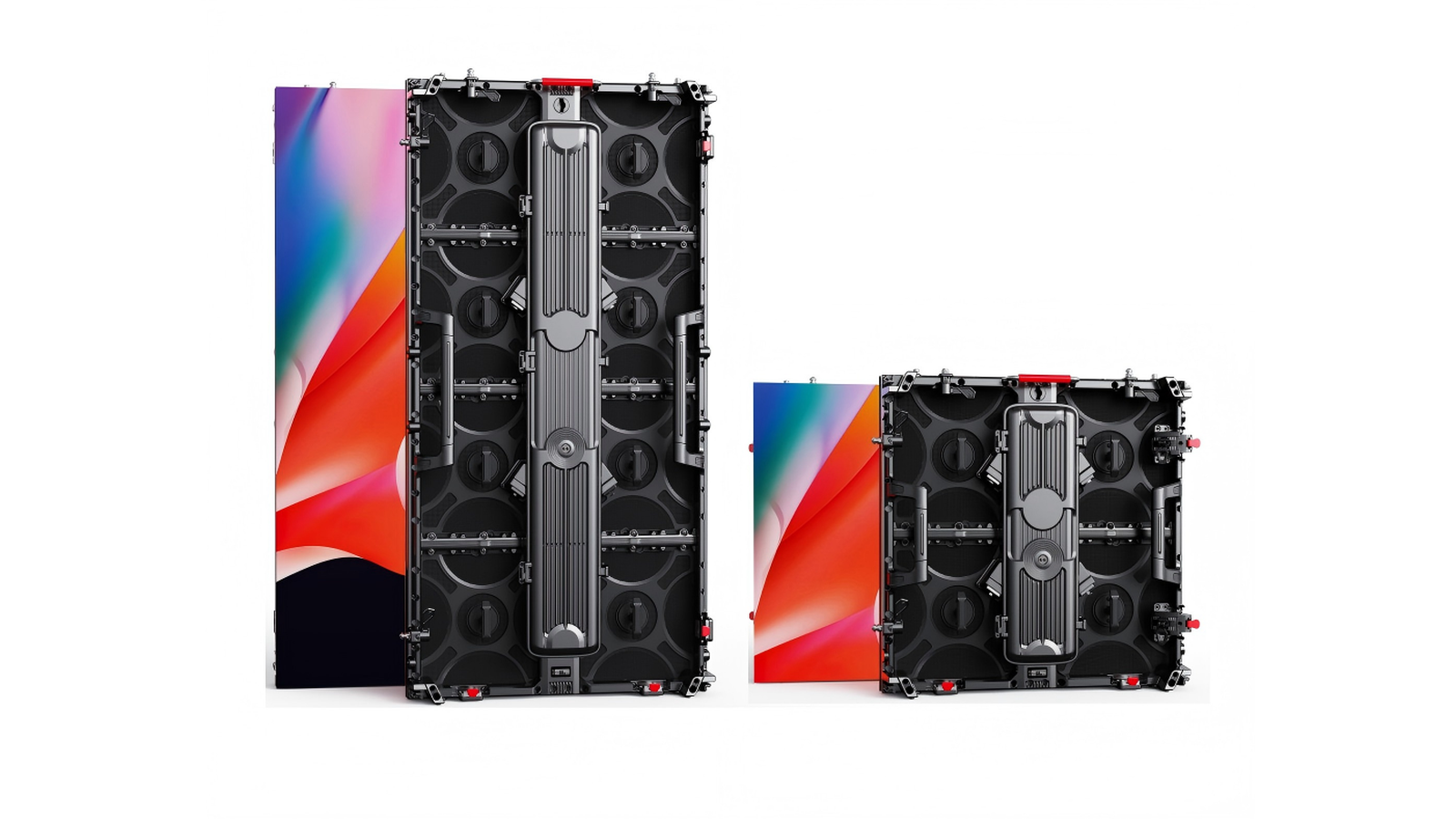
SFxDisplay builds rental cabinets that hang or stack, and fixed indoor cabinets that mount to a wall. We are a factory, not the venue electrician. Use the sequence below to brief that electrician. Do not hang a wall off a convenience receptacle behind the drum riser.
Peak is a lab condition. Average is the show.
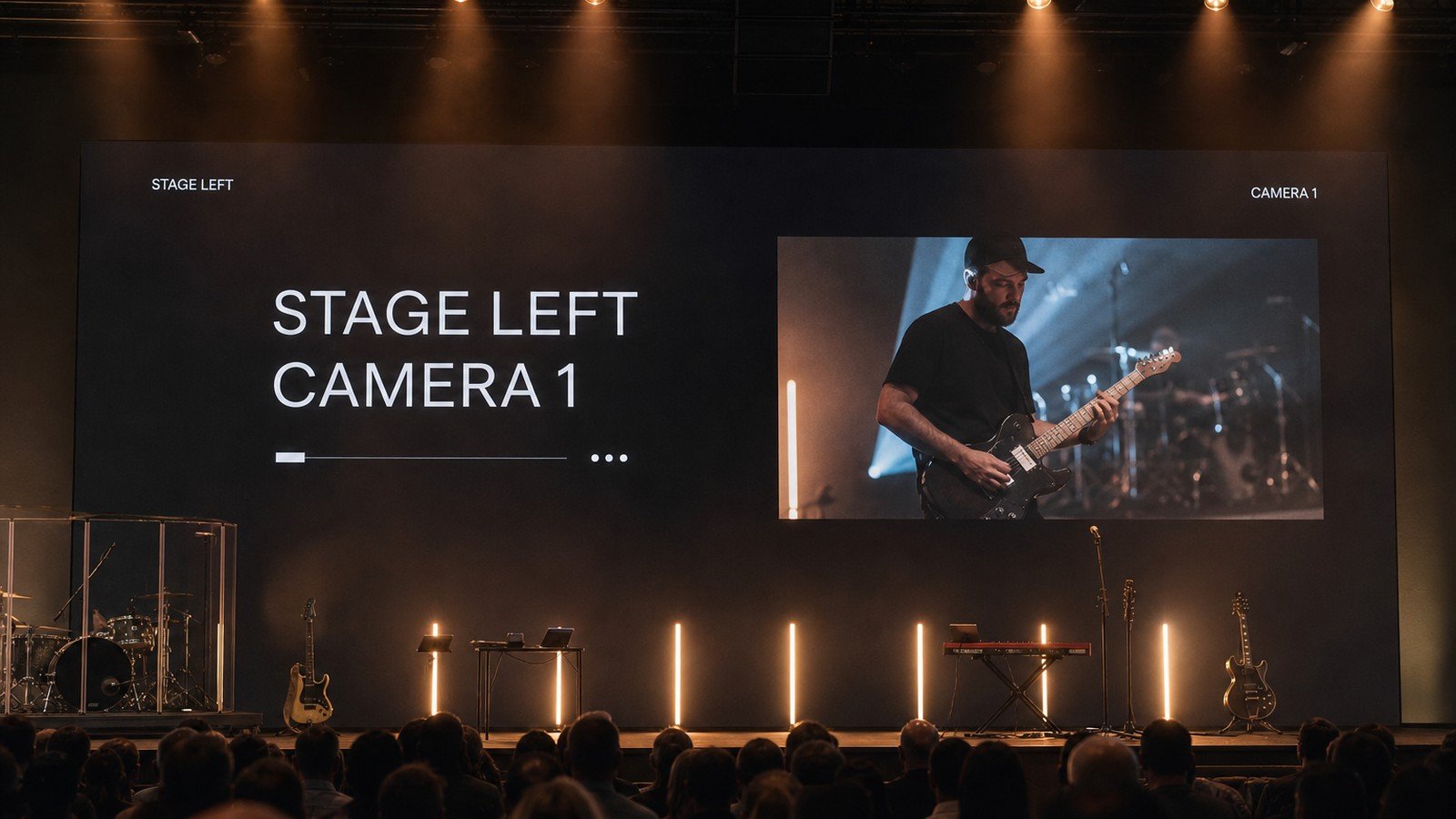
Peak power is every LED at full white, at the brightness on the PO, usually with every RGB sub-pixel driven. Calibration slides, a forgotten white holding graphic, and some outdoor daylight looks get close. Worship lyrics on black, IMAG with a dark stage, and most concert content do not.
Across indoor rental and sanctuary walls, real mixed content commonly lands around 30–50% of peak. Dark-background motion can sit lower. A full-white test pattern sits near 100%. That gap is why a volunteer can run a wall all morning on “not much” and still dump the breaker when the first bright bumper hits.
SFxDisplay’s indoor COB series publishes both numbers on the product sheet: 400 W/m² max, 120 W/m² average. That average is 30% of peak. It is a real example of the gap, not a promise that every cabinet in the factory behaves the same. Indoor SMD and outdoor rental walls run higher peaks because they are brighter. Always take both figures from the BOM you are buying, in W/m² or watts per cabinet, with brightness named.
Do not treat a single “Power consumption: 700 W” cell as gospel if the sheet does not say per cabinet, per square metre, peak or average. Ask.
For brightness itself, see LED screen nits vs lumens. Running an indoor wall at 100% nits in a dark room wastes watts and heat. It does not make the circuit smaller. The circuit still has to survive the moment someone turns it up.
Planning bands, not a quote
These are planning ranges from 2026 church, rental, and factory guides. They are not SFxDisplay list prices and not a substitute for the PO.
| Job | Typical peak (full white) | Typical average (mixed content) | What the average is for |
|---|---|---|---|
| Indoor meeting / COB fine pitch | ~400–600 W/m² | ~30–40% of peak | kWh, HVAC |
| Indoor rental / sanctuary / events | ~400–700 W/m² | ~30–50% of peak | kWh, fuel |
| Outdoor daylight rental / billboard | often 800–1,200 W/m² | ~45–60% of peak, higher if it stays bright | kWh, generator fuel |
A 4 m × 3 m indoor rental wall at a 600 W/m² planning peak is about 7.2 kW at full white. At 40% content it is about 2.9 kW. The electrician sizes to 7.2 kW (plus processor, plus code derating). The facilities manager budgets kWh from ~2.9 kW at the hours you actually run. If you reverse those two figures, one of them will be wrong in public.
Outdoor daylight is a different electrical problem from the same cabinet count indoors. See nits again: 5,000–7,000 nit outdoor walls draw more than 800–1,500 nit indoor walls. Do not copy an indoor circuit plan onto a parking-lot hang.
Size the circuit for peak, then derate it
In the US, a load that runs three hours or more is treated as continuous. Planning practice is to keep that load at 80% of the breaker (NEC 210.20 is the usual citation; local code wins). A 20 A circuit at 120 V is 2,400 W on the handle. Continuous usable is 1,920 W.
Rough conversion: amps ≈ watts ÷ volts. Then divide by 0.8 before you count breakers.
Worked planning example: 12 m² indoor wall, 600 W/m² peak → 7,200 W of cabinets.
| Service | Peak amps | After 80% derate | Dedicated circuits (planning) |
|---|---|---|---|
| 120 V, 20 A | 60 A | 75 A of capacity | four 20 A, nothing else on them |
| 230 V, 16 A | 31 A | ~39 A of capacity | three 16 A, or one 32 A with headroom |
| 230 V, 32 A | 31 A | ~39 A of capacity | one 32 A often holds this wall; confirm the venue socket is actually 32 A and actually dedicated |
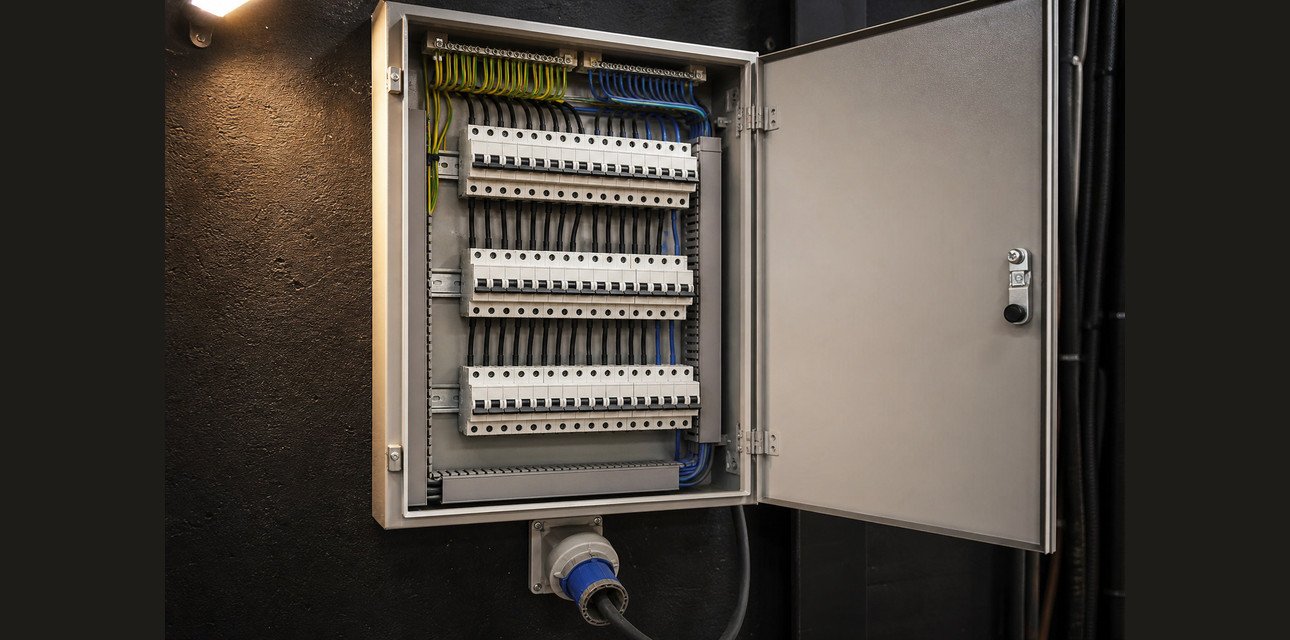
Add 10–20% for the processor, fibre converters, media PC, and the rack that must not share a coffee circuit. Add more if the same board also feeds stage lighting. A convenience outlet behind the stage is not a survey.
Same 12 m² on SFxDisplay indoor COB numbers (400 / 120 W/m²): peak 4.8 kW, average 1.44 kW. The circuit still follows 4.8 kW, not 1.44 kW. The bill follows 1.44 kW at the brightness you actually run.
We do not certify electrical work. A licensed electrician on the site survey is part of the job, not a surprise line after the panels land.
Inrush is why the wall fails at power-on, not at the chorus
Every cabinet has switching supplies. At the moment you hit the contactor they charge together. That spike is short and it is real. A breaker that is “fine” at steady average can still open when volunteers power the whole wall at once.
Practical factory advice, not a rigging plot:
- Sequence power: processor and control first, then the wall in sections, not one giant slam.
- Do not share the wall with inductive junk (motors, dimmers) on the same small breaker if you can avoid it.
- Generators need headroom, not a nameplate that matches average kW. Event crews often plan ~25–30% above calculated peak so inrush and other departments do not collapse the voltage. Voltage sag looks like flicker and colour shift before the screen goes black.
If the Sunday wall sometimes “just doesn’t start,” look at inrush and shared circuits before you replace modules.
Heat is the same watts, in the room
Every watt the wall draws becomes heat. An indoor 7 kW peak wall that averages 3 kW is still a 3 kW heater in the sanctuary for as long as it is on. Processor closets and sealed backstage pockets get hotter than the pews. Indoor COB on our sheet is the efficient end of the range (120 W/m² average). Outdoor high-nit cabinets are not.
If the room already struggles in summer, say so before you pick nits. Dimming an indoor wall to the brightness the cameras and the congregation actually need cuts both kWh and HVAC. It does not let you undersize the breaker.
500 × 500 vs 500 × 1000 does not change the physics
SFxDisplay rental cabinets are 500 × 500 mm or 500 × 1000 mm, hang or ground-stack. Cabinet size changes how you lift and how many locks you close. It does not change watts per square metre of the same series at the same brightness. Forty-five 500 × 1000 cabinets and ninety 500 × 500 cabinets covering the same 7.5 × 3 m rectangle still ask the same electrical question.
Lock style does not either. Soft lock vs hard lock is a touring mechanic. See soft vs hard connection. Pitch still comes from the closest seat: P2.6 vs P2.9 vs P3.91.
What to send before you buy the panels
A useful power brief is shorter than a 4K wishlist:
- Finished width × height, indoor or outdoor, hang / stack / wall-mount
- Brightness you will actually run (not the catalogue maximum)
- House service: volts, single- or three-phase, nearest dedicated breaker size, and whether anything else is on it
- Cameras yes/no (that sets refresh, not watts — see 3840Hz vs 7680Hz)
We will return a cabinet count, the peak and average watts from that BOM, and whether the job wants SFR-S / SFR-H rental or a fixed indoor series. Steel, motors, and the electrical permit stay on site. Cost beyond the cabinets: LED video wall cost in 2026. Churches comparing LED to a projector: church LED wall vs projector.
FAQ
How many watts per square metre does an LED wall use?
Ask for peak and average. Indoor event and sanctuary walls often plan around 400–700 W/m² peak, with mixed content at roughly a third to a half of that. Outdoor daylight is higher. Use the sheet for the cabinets on the PO.
How many amps does a church LED wall need?
Amps = peak watts ÷ volts, then apply the 80% continuous rule. A 12 m² indoor wall at a 7.2 kW planning peak is about four dedicated 20 A circuits at 120 V, or a 32 A-class feed at 230 V with headroom. Measure the building. Do not guess from a projector circuit.
Can we run it from the existing stage outlets?
Only if those outlets are dedicated, correctly rated, and not already feeding lights, audio, and a coffee urn. Most older sanctuaries need new home-runs. That is an electrician line item, not a factory accessory.
Do we size the generator to average power?
No. Size to peak, plus processor, plus inrush headroom. Use average for fuel and kWh.
Does finer pitch use more power?
More LEDs per square metre can draw more, but driver design and brightness dominate. A P2.6 wall at 1,000 nits can be kinder than a coarser outdoor wall at 6,000 nits. Compare measured W/m² at the brightness you will run.
Will SFxDisplay spec the electrical panel?
We spec cabinet peak and average, recommended cabinets per power feed, and the processor load. Building panels, permits, and generator hire are local work. We will not pretend a blog post is a load calc.
Two numbers on the PO, used in two places
Write peak W/m² at named nits for the electrician. Write average W/m² at the same nits for the bill. If the vendor only prints one cell, it is not finished.
Send width × height, indoor vs outdoor, the service you actually have, and closest viewer. Start on the rental series or indoor series, or contact SFxDisplay. Buy the wall the room can power.

1 Comment
[…] and windows are a different page: church LED wall vs projector. Circuit sizing is not hang sizing: LED wall peak vs average power. Outdoor load-in is a different checklist: outdoor festival rental LED checklist. Cost beyond the […]