If you came from projectors, you were trained to shop in lumens. LED video walls do not work that way. The number on an LED spec sheet is nits (candelas per square meter). Nits describe how bright the surface looks. Lumens describe how much light a projector throws before it hits a screen. Mixing the two is how indoor walls get specified for parking lots, and how outdoor walls get left at full blast in a dark sanctuary.
SFxDisplay quotes brightness in nits on rental, fixed, trailer, and taxi products. Indoor stock is typically 800 to 1,500 nits. Outdoor stock is typically 4,500 to 6,500 nits and up. Those ranges answer "how bright should the LED be." A copied projector lumen number does not.
Lumens, nits, and lux
Lumens measure luminous flux. They are a total. A 6,000 lumen projector dumps 6,000 lumens into the room. The lens, the throw, the screen gain, and the ambient light then decide how bright the picture looks. Two projectors with the same lumen rating can look very different on two different screens.
Nits measure luminance, in cd/m². They are a density. One nit is one candela per square meter of the LED face. When a cabinet is listed at 1,200 nits, that is the brightness of the surface (usually at full white). The viewer looking at the wall cares about nits. The wall does not throw lumens onto a separate screen. The wall is the screen.
Lux measures illuminance on a surface, in lumens per square meter. An ambient-light meter in the sanctuary reads lux. That number tells you how hard the LED has to work. It is not a substitute for the LED's own nit rating.
If a quote only lists lumens for a direct-view LED wall, ask the factory to restate brightness in cd/m² at full white, and to say whether that figure is typical, minimum, or a peak marketing number.
You cannot convert projector lumens into LED nits
People ask for a formula. There is a classroom conversion that mixes lumens, area, and screen gain, but it does not map a 10,000 lumen projector onto a 10,000 nit LED wall. The geometries are different.
A projector lights a surface from a distance. Ambient light hits the same surface and washes the image. You fight that with more lumens, a higher-gain screen, and better control of house lights.
An LED wall emits light from the same plane as the image. Ambient light still competes, which is why outdoor walls need thousands of nits. But doubling wall area at the same nit level doubles the total light into the room. It does not double the apparent brightness of the picture. The picture stays at the same nits. It is just bigger.
When a church says "our 12,000 lumen projector is struggling with the windows, how many lumens does the LED need," the useful reply is: stop using lumens. Measure how bright the face must look against those windows. For most indoor rooms with daylight spill, that is still an indoor LED in the 800 to 1,500 nit range, not an outdoor 5,000 nit billboard. For a wall that faces the sun with no building around it, you have left the indoor product line. See indoor vs outdoor LED walls.
Indoor 800-1,500 nits vs outdoor 4,500-6,500+
Indoor rental and fixed. 800 nits is a starting point for a dark room. 1,200 to 1,500 nits gives headroom for IMAG, lyrics, and mixed lighting. Many sanctuaries never need the top of the range at runtime. They need the ability to get there on a bright Sunday, then dim for a night service.
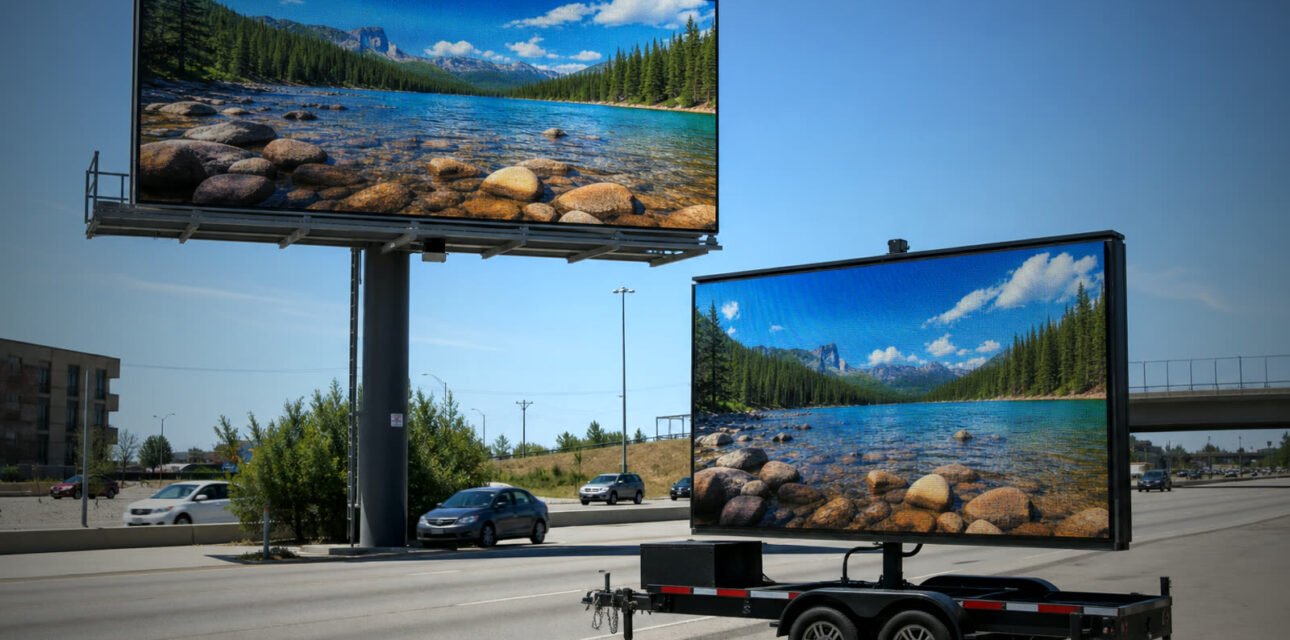
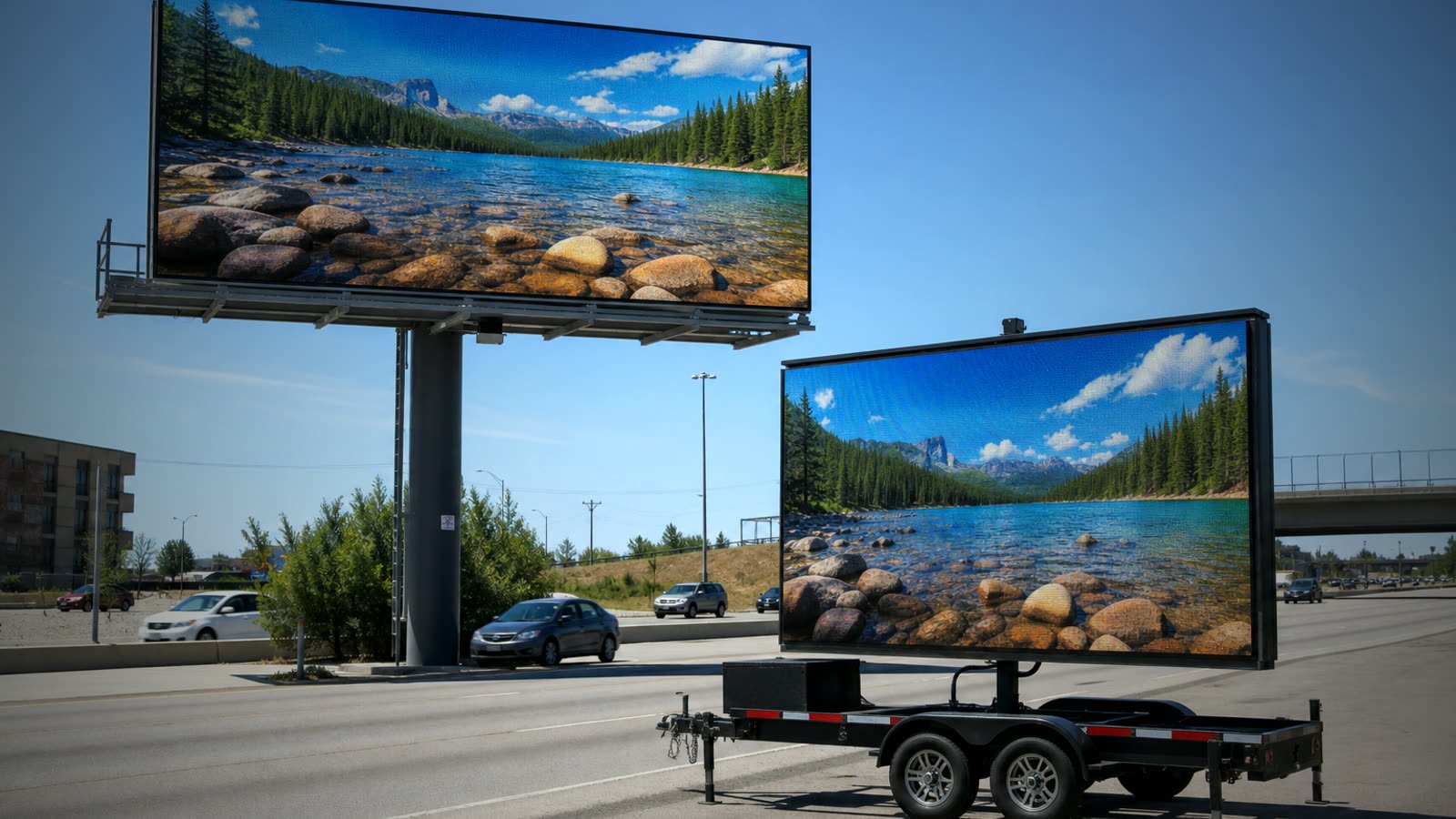
Outdoor rental, facade, trailer, taxi. 4,500 nits is a common floor for overcast or shaded outdoor use. 5,500 to 6,500 nits is the usual daytime band. South-facing roadside boards and some taxi LED tops sit at the high end because they fight sun and have short viewing times. Night operation should dim.
Covered but bright. A glass atrium is not outdoor, but it is not a black box either. Spec indoor cabinets at the high end of the indoor nit range, confirm they are still indoor IP, and plan HVAC. Do not buy outdoor 6,000 nit cabinets for a lobby unless you like a wall that cannot dim smoothly and runs hot.
Pitch still matters. A very bright coarse wall looks like a grid up close. Brightness does not replace viewing distance.
Do not run indoor walls at 100 percent
Peak nits exist so the wall can overcome a bright scene. They are not a daily operating point.
At 100 percent on an indoor wall you typically get faster diode aging (especially blue), more heat in the modules and the room, crushed low gray, and harsh IMAG. Cameras expose for the wall and the speaker goes dark, or the reverse. In a dark house, a wall left at catalog peak also fatigues the audience.
Set a conservative ceiling in the processor, often well under the catalog peak for indoor rooms. Calibrate at the level you will actually use. Keep the extra nits as reserve for high-APL content and for the one service with sun on the face.
Outdoor walls have the same rule at night. Catalog 6,000 nits is for noon. After sunset, drop to a level that matches street lighting and does not glare.
SFxDisplay ages every batch for 72 hours at full white and full color before packing. That test is a factory stress, not a recommendation for 24/7 field operation at maximum brightness. For around-the-clock digital out-of-home, ask us to spec thermal design, brightness derating, and a spare-module plan.
What to put on the quote instead of a lumen number
Ask for five brightness facts in writing:
- Nits at full white, with the test method (typical vs minimum, center vs average).
- Indoor or outdoor product, because the nit bands do not overlap much.
- Dimming behavior. Can the wall hold color and gray scale at 20 to 30 percent? Indoor churches live there.
- Power at the brightness you will use, not only at a lab peak.
- Documents that match the cabinet. RoHS and CE appear on some SFxDisplay spec tables. If you need additional reports for your market, request them. Do not assume ENERGY STAR, UL, or ISO coverage without the file.
If a salesperson says "this LED is 5,000 lumens," treat that as a missing spec, not a feature.
For mobile jobs, add the generator or vehicle electrical budget. Outdoor nits cost watts. A trailer LED that can do 6,000 nits on a sunny roadside is a different electrical package from an indoor P2.6 wall in a hotel ballroom.
Brightness reference table
| Situation | Unit to use | Typical LED target | Do not do this |
|---|---|---|---|
| Replacing a church projector | Nits | Indoor 800-1,500, then dim | Copy the old lumen rating onto the PO |
| Dark theatre backdrop | Nits | Indoor, often run far below peak | Leave the wall at 100 percent |
| Lobby with windows | Nits | Indoor high end (~1,200-1,500) | Buy outdoor IP65 just for nits |
| Daytime festival / roadside | Nits | Outdoor 4,500-6,500+ | Use indoor cabinets under a tent |
| Night outdoor advertising | Nits | Dim from the outdoor peak | Leave 6,000 nits on after dark |
| Projector shopping | Lumens | Lamp or laser output of the projector | Compare that lumen number to LED nits |
These are planning bands, not a certificate. Site measurement still wins. A south-facing glass wall at noon is a different indoor problem than a black-box studio.
Churches should spec nits from the brightest service (usually indoor 800 to 1,500), then dim at night. Ballrooms need indoor headroom against house lights. Any daylight job starts from outdoor nits and outdoor IP. Taxi tops and trailers are outdoor-class brightness, with power and vehicle rules on the same quote.
FAQ
How many lumens do I need for a church LED wall? None. Spec the wall in nits. Most indoor sanctuaries land between 800 and 1,500 nits of capability, then run lower. Measure ambient light and demo with your cameras. Do not convert the old projector's lumen rating.
Is 1,000 nits enough outdoors? No. Daytime outdoor work needs thousands of nits, typically 4,500 to 6,500 or more. 1,000 nits is an indoor number. It will look gray against the sky.
Why does the wall look noisy or banded when we dim it? Some cabinets lose grayscale quality far below peak. That is a driver and processing issue, not a reason to run 100 percent. Ask for a low-brightness demo (20 to 30 percent) before you buy indoor.
Can I add nits later with a software update? No. Peak brightness is a hardware limit (diodes, drive current, thermal design). Software can only dim from that peak. If you under-buy outdoor nits, you replace cabinets.
Do higher nits mean a better picture? Only against brighter ambient light. In a dark room, extra nits you actually use will hurt eyes, cameras, and diode life. Buy headroom. Operate below it.
Talk to SFxDisplay
Tell us indoor or outdoor, day or night, and whether cameras will shoot the wall. We will quote nits (not lumens), a dimming starting point, and the matching rental, fixed, or trailer product.