If you are trying to learn how to choose an LED display, skip the 20-row spec sheet until four site facts are written down. Viewing distance sets pixel pitch. Ambient light sets brightness (nits) and weather rating (IP). How the wall will be used — rented every weekend, bolted to a building, or rolled on a trailer — sets the cabinet. Cameras, if they will shoot the wall, set refresh rate.
Those four decisions remove most quote surprises. Steel, processor, freight, and spares are cost, not product choice. We manufacture rental, fixed, and trailer cabinets in Shenzhen; the sequence below is the order we use on a first call.
1. Viewing distance → pixel pitch
Pixel pitch is the center-to-center gap between LEDs, in millimeters. P2.6 means 2.6 mm. Smaller pitch packs more pixels into each square meter and costs more. It only pays off if someone stands close enough to resolve those extra pixels.
Two first-pass rules are enough. They are planning tools, not laboratory limits:
- In meters, the closest viewer is often near the pitch number (P2.6 ≈ 2.6 m). If people sit closer than that, the grid can start to show.
- In feet, many AV shops still use about 8–10 ft of viewing distance per millimeter of pitch as a “looks solid from the first row” floor.
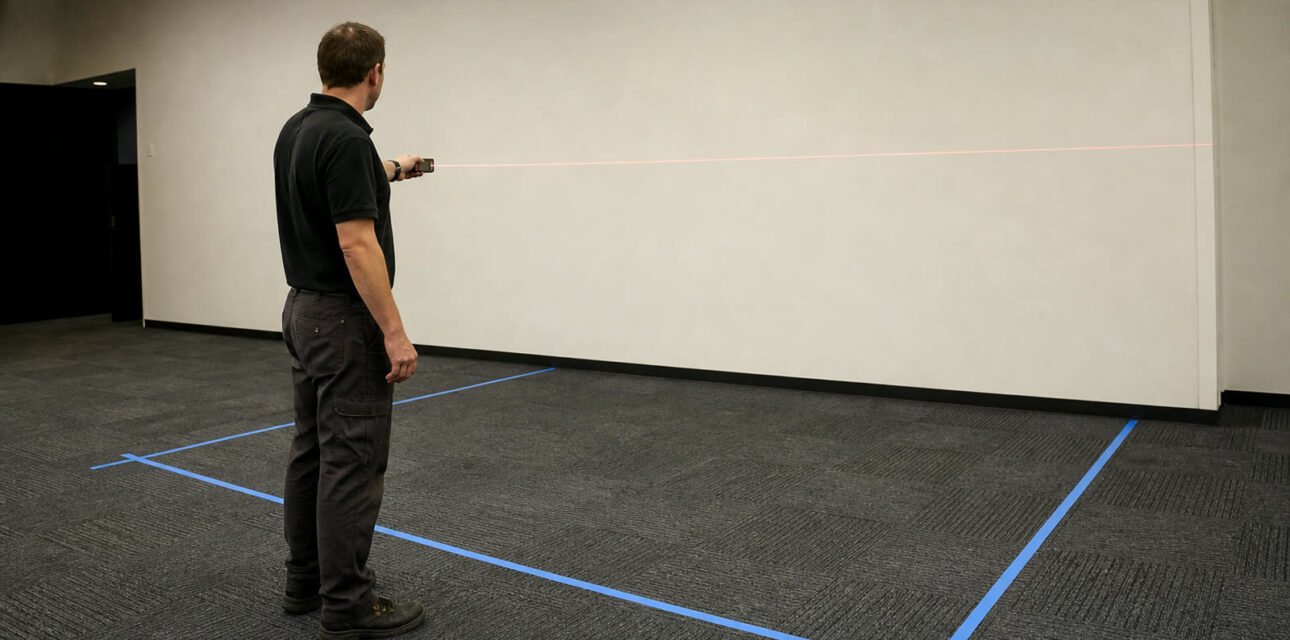
Measure the closest seat or standing position, not the average. A balcony, a stage lip, or a store aisle can sit much nearer than the back wall. Specifying the back-row distance is how rooms end up with a pitch they never needed.
| Closest viewer (approx.) | Pitch band that usually fits | Typical job |
|---|---|---|
| 2–4 m / 6–13 ft | P1.5–P1.9 | lobby, control room, close IMAG side screens |
| 4–8 m / 13–26 ft | P2.0–P2.9 | churches, ballrooms, indoor stages |
| 8–15 m / 26–50 ft | P2.9–P3.91 | concert backdrops, general rental inventory |
| 15 m+ / 50 ft+ | P3.91–P6 and coarser | outdoor fixed faces, trailer sides, long-throw sites |
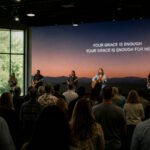
Fine pitch is not automatically the better screen. On a 10–12 m wide sanctuary or ballroom wall, P1.5 multiplies module count, power supplies, and receiving cards without changing what the back row can see. For most rooms, P2.6 or P2.9 is the honest band. If people will stand inside 3 m of an indoor wall, look at COB indoor screens. If the wall will tour, start with the rental cabinet lineup (P3.91 / 2.9 / 2.6 / 1.9 / 1.5).
A 4 m-wide P2.6 wall is about 1,538 pixels across — useful HD, not UHD. Most buyers need a clean first row, not a 4K file on a wall that cannot hold 3840 pixels.
2. Ambient light → nits and IP rating
Brightness on an LED sheet is nits (cd/m²). It is not projector lumens. Mixing those units is a common way indoor modules get specified for a sunlit plaza.
Rounded planning bands we use when a site photo is all we have:
- Dark or dim indoor room: about 600–1,000 nits.
- Indoor with windows or house lights left on: about 1,000–1,500 nits.
- Covered outdoor, bright atrium, or open hangar: about 2,500–4,000 nits.
- Direct sun on a street, façade, or trailer face: about 4,500–6,500 nits, sometimes more for a south-facing glass wall.
Higher nits are not free: outdoor-bright modules run hotter and cost more. Indoors, a 5,000-nit wall is often too bright; dimming a driver not built for low gray can band. Match nits to the worst light, then confirm you can dim cleanly.
IP rating is the weather decision. Indoor cabinets commonly sit around IP30–IP54 on the front. Outdoor faces should be specified for rain and dust on the side that sees weather — typically IP65 for a sealed outdoor cabinet. Do not take indoor die-cast to a festival because “we will tent it.” Wind-driven rain and overnight condensation still reach the modules.
3. Install type → rental, fixed, or trailer
The same pitch can live in three mechanical packages. Choosing the wrong package is more expensive than choosing one pitch step too fine.
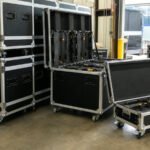
Rental cabinets (usually 500 × 500 mm or 500 × 1,000 mm die-cast aluminum) hang from truss or stack from the floor, lock quickly, and travel in flight cases. SFxDisplay rental screens are built indoor or outdoor, with hanging and stacking hardware, and we typically ship NovaStar processing (other brands on request). Buy this package if a crew will assemble and strike the wall many times a year.
Fixed mounting cabinets stay on one wall for years. Front or rear service, cable paths, steel, and a spare-module plan matter more than how fast a 500 mm box can hang. See fixed mounting LED screens. If the wall is a known rectangle on a known building, do not pay the full rental mechanical premium unless you also need to move it.
Trailer or truck faces are the third path. Mobile advertising, overflow lots, and sports-site screens often cost less as a legal trailer with a generator plan than as a wall you rebuild every weekend. Trailer LED screens can be single- or double-sided; chassis, lighting, and country road rules are part of that quote, not extras you add later.
If the job is a one-off gala, renting from a local house is usually cheaper than buying. If you are the house, buy rental cabinets. If the wall never moves, buy fixed. That three-way split belongs on the first email, not the last.
4. Camera use → refresh rate
Human eyes integrate LED scan in a way cameras do not. If the wall is only watched in the room, a 1920 Hz or 3840 Hz driver is often enough. If IMAG, livestream, or concert cameras will point at it, treat refresh rate as a buying spec.
- 1920 Hz: acceptable for many static indoor signs. Risky on camera.
- 3840 Hz: a common baseline for event walls and many church installs.
- 7680 Hz: the band we put on rental cabinets when cameras are in the brief. It reduces scan-line flicker at typical shutter speeds. It does not by itself remove moiré.
Moiré — the wavy grid a sensor picks up — is a sampling problem between the pixel lattice and the camera. Distance, angle, and lens choice matter as much as Hertz. Say “cameras will shoot this” on the first RFQ so the module, mask, and driver are chosen together. A wall that looks fine to a walkthrough and looks striped on Sunday’s stream is a spec miss, not a content miss.
Walk the four decisions in this order
- Measure closest and farthest viewers. Circle a pitch band in the table.
- Photograph the site at the worst light (noon sun, or house lights at full). Circle nits and IP.
- Write down whether the wall moves weekly, sits for a decade, or rolls on a trailer.
- Write down whether cameras shoot it. If yes, ask for 3840 Hz as a floor and 7680 Hz if the budget allows.
- Only then size the wall in meters and ask for a module layout.
A 6 m × 3.5 m indoor stage wall with a 6 m first row, no sun, no cameras, and a two-week install is a different product from the same rectangle hung outdoors for a festival with IMAG. Same square meters; different pitch, nits, IP, cabinet, and processor.
What still belongs on the quote after the product is chosen
Panels are typically about 55–65% of a turnkey number. Equipment itself often lands in a $600–$2,500 per m² band depending on pitch and package — planning estimates, not a quote. You still need steel or truss, a processor and sending cards, spare modules from the same LED bin, freight, and a power plan. Those line items are why two “P2.6 walls” from two suppliers can differ by tens of percent.
If you already know the rectangle and only need factory options (cabinet size, lamp brand, receiving card), use the existing customize notes and then send the four decisions above with a site photo.
FAQ
Is the 1 mm ≈ 1 m rule accurate? It is a comfort check for a first email, not a visual-acuity formula. Use it to stay out of the wrong pitch family, then confirm against a seating drawing.
Can I use indoor cabinets outdoors if it is not raining? Do not. Dew, dust, and one unexpected shower are enough. Indoor vs outdoor is an IP and brightness decision, not a weather-app decision.
Do I need P1.5 because we produce in 4K? Only if the wall is wide enough and close enough for those pixels to exist and be seen. A 4K file scaled onto a P2.9 stage wall is normal. Buying P1.5 “for 4K” on a 8 m-wide backdrop is usually wasted money.
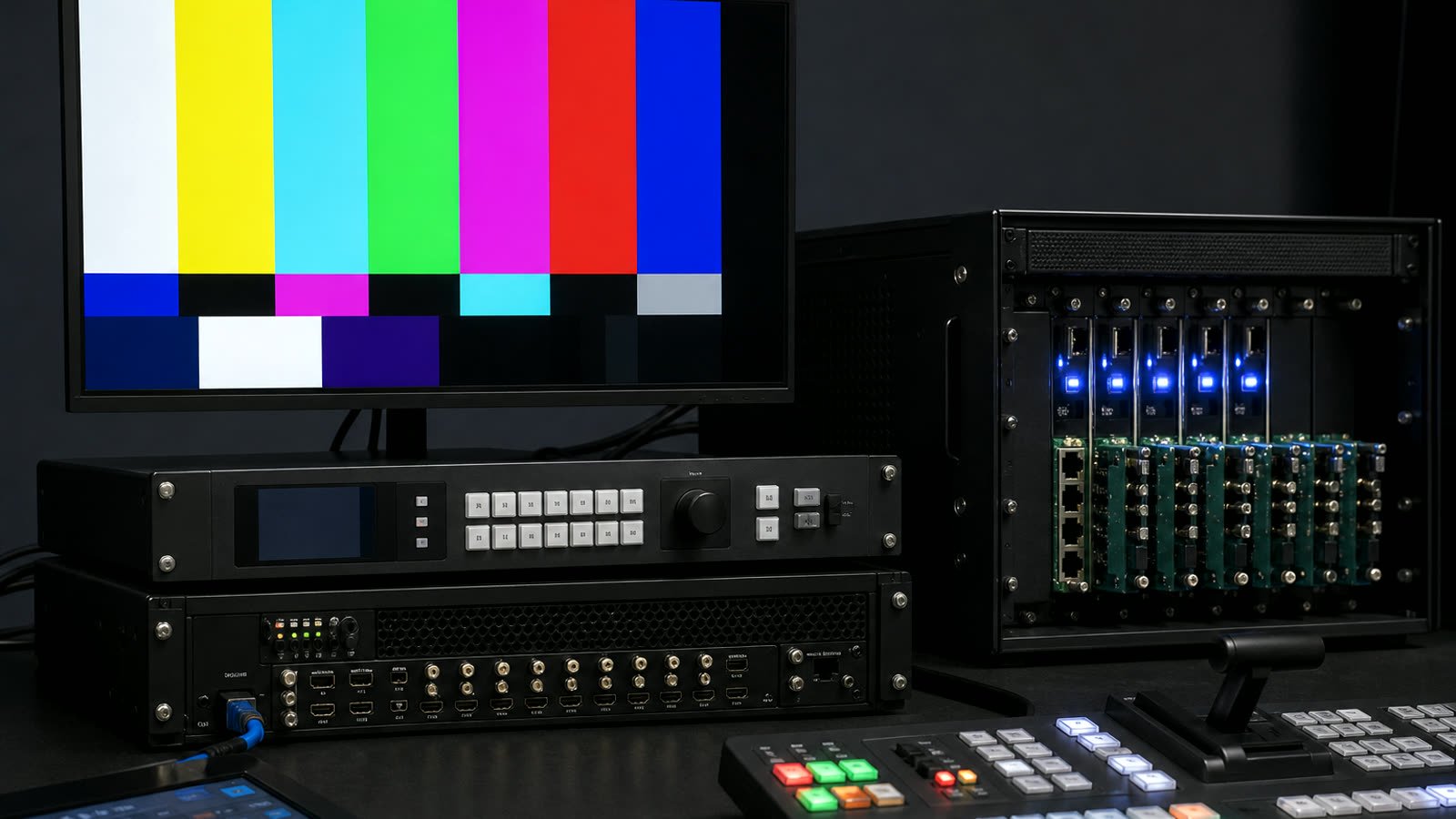
What processor should I name on the RFQ? Name the house standard if you have one. We commonly ship NovaStar; other brands are optional.
Where do I send a site photo and the four answers? Contact SFxDisplay with closest viewing distance, a daytime photo, install type (rental / fixed / trailer), and whether cameras will shoot the wall.
Get a layout, not a guess
Send the four facts. We will return a pitch, cabinet type, and a module drawing you can price against steel and power. Start at sfxdisplay.com/contact.